SDM Projects
A new website for a Bury St Edmunds builder, working in three days.
- Client
- SDM Projects: Steve, a builder and renovator since 1989
- Where
- Bury St Edmunds, Suffolk
- What we did
- Understanding the business, the words, the layout, the design, the build, Google, and an admin page for Steve
- How long
- A working site in about three days; live on his own address nine days after we started
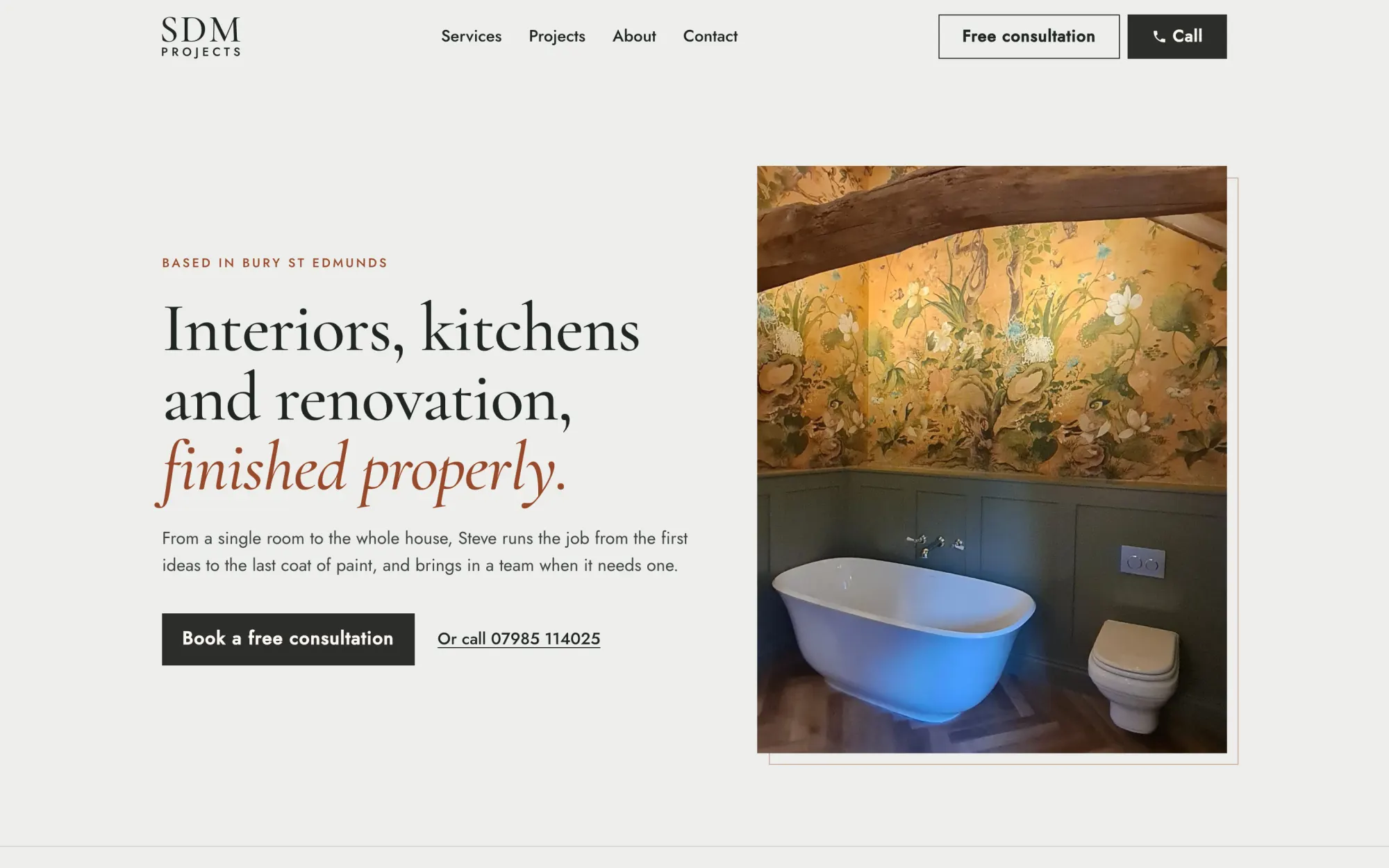
Where Steve was
Steve has run SDM Projects since 1989: kitchens, bathrooms, decorating and whole renovations, often running the job himself and bringing in a team when it needs one. His old website was built on Weebly. It was slow, it didn’t suit what the business needed, and it wasn’t being found on Google.
Then a trade event came up where Steve wanted to show people his work. He needed a website, and quickly.
Understanding the business first
Before designing anything, we worked out what makes Steve worth calling. We recovered the old site’s words from the internet archive, went through them with him, and pulled out the things that matter to someone choosing a builder.
-
One person runs the whole job
From the first ideas to the last coat of paint, with a team brought in when the job needs one. Most people choosing a builder worry about juggling trades; Steve takes that away.
-
A free consultation, then a written plan
Steve’s own way of working, so it became the main thing the site asks people to do, instead of a generic “get a quote”.
-
The full range, said plainly
Interiors, kitchens, bathrooms, renovation, carpentry, decorating, plumbing and heating, and work for landlords and letting agents.
-
Only what he can stand behind
No borrowed claims and no certificates he doesn’t hold. Where a job needs a specialist, the words say what Steve does and leave it there.
Built around how people choose a builder
- One next step, everywhere: book a free consultation, or call. On a phone, the call button stays at the top of every page.
- One page for every kind of work, with a section for each: what’s included, and a button that opens the consultation form with that job already chosen.
- A consultation page with nothing to distract: the form and the phone number, nothing else.
- Nothing lost from the old site: its old page addresses send people to the right new page, so old links and Google results still work.
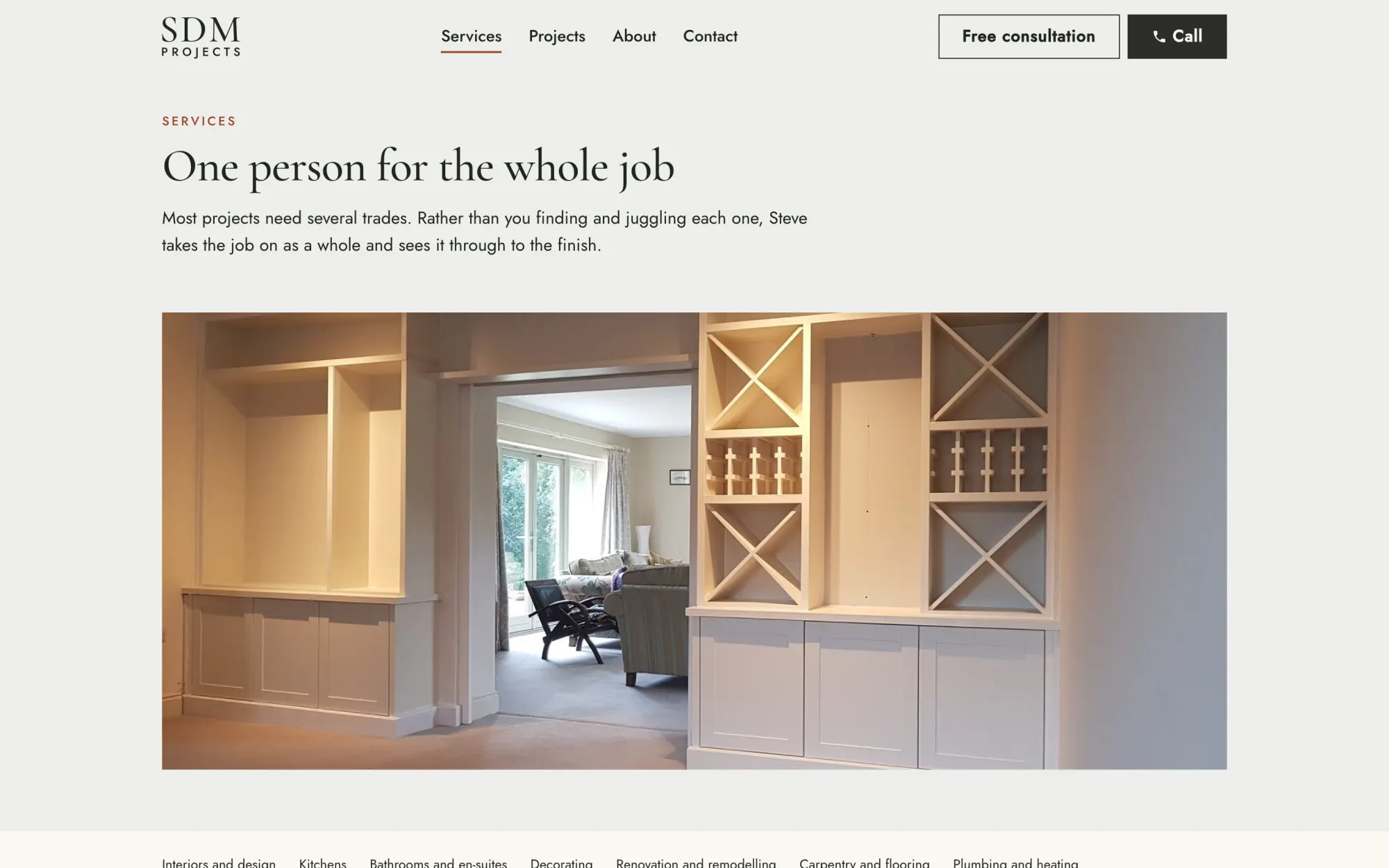
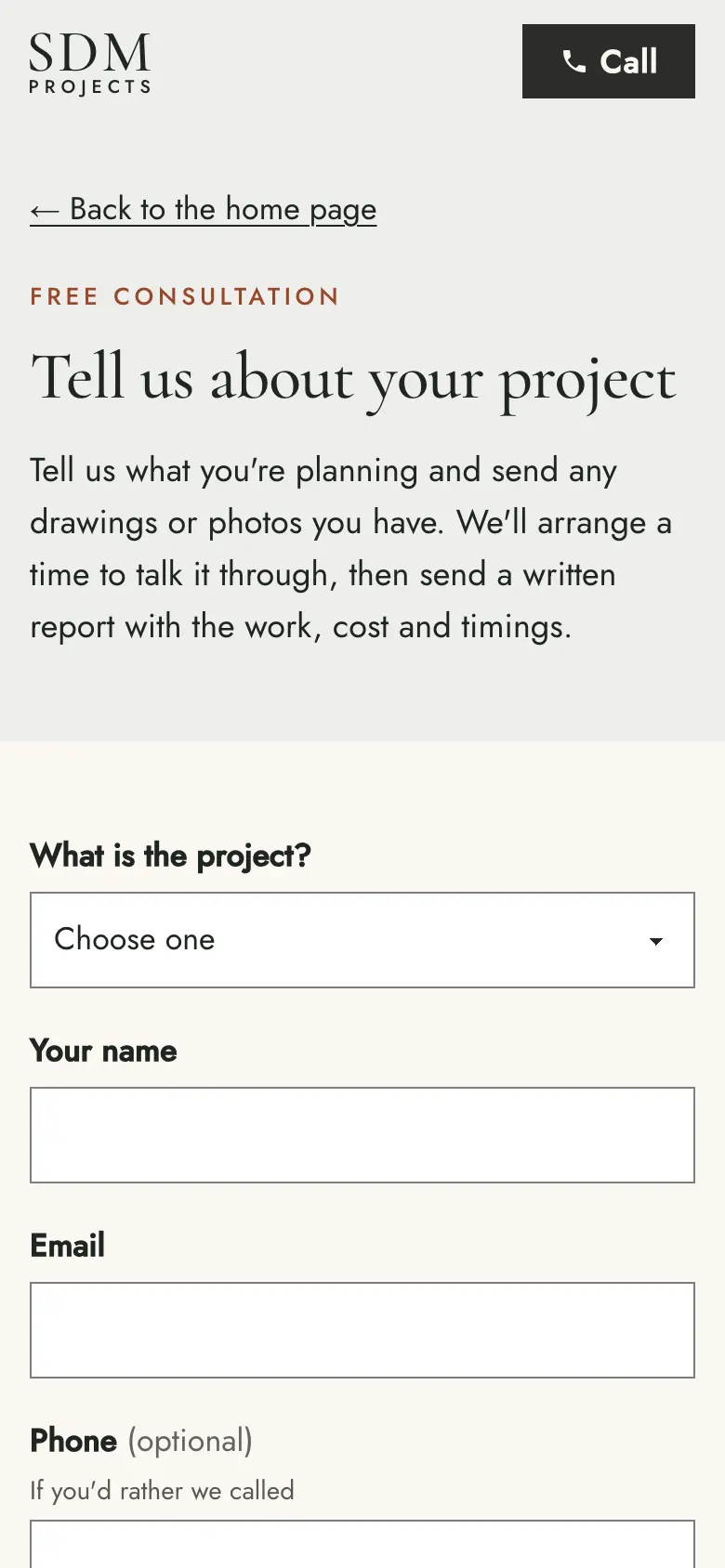
A look that fits the work
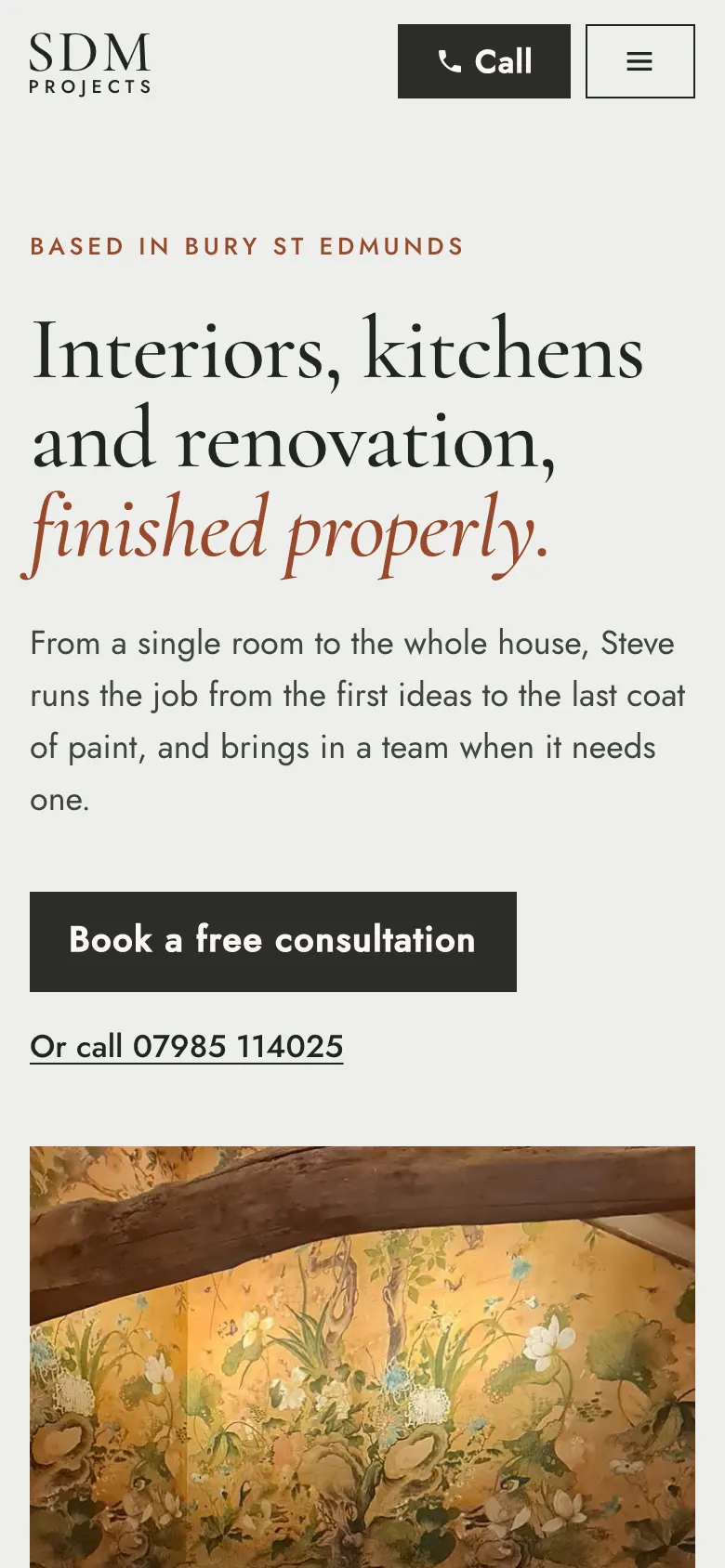
Steve’s best work is interiors, so the site looks like an interiors business: elegant type, warm colours and room for photos. A builder’s photos are usually taken on a phone, in whatever light there is, so the design never depends on one photo being perfect. The words lead, and every photo is framed the same way.
We showed Steve four colour schemes on the working site, and he chose the one he liked. Then we went through over fifty of his own photos, picked the best for each page, and took out the hidden location details phones store in them.
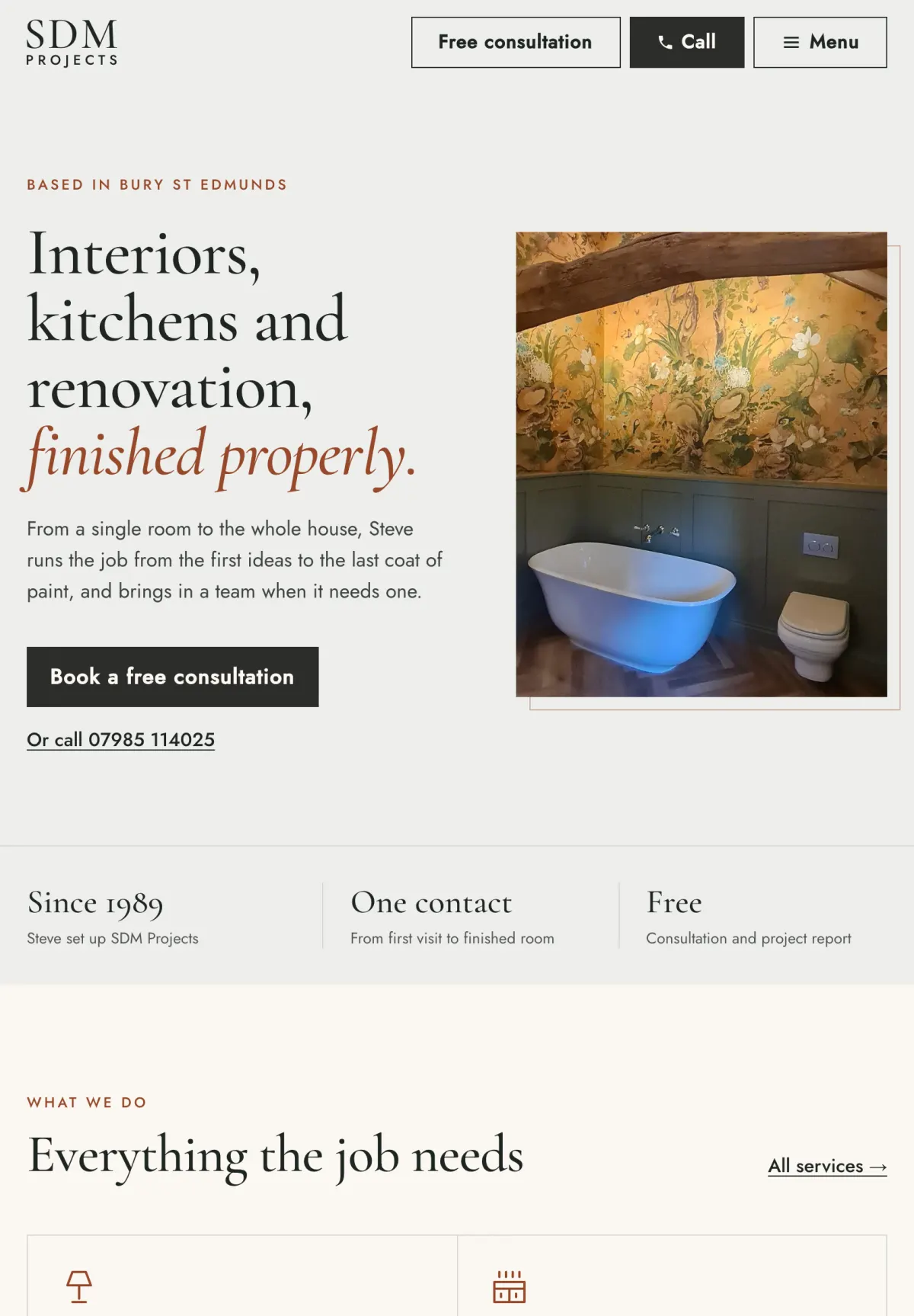
Found on Google, in Bury St Edmunds
Most people find a builder by searching for one nearby. So the site tells Google exactly what SDM Projects is, that it’s based in Bury St Edmunds, and which towns Steve covers. It’s quick to load on a phone, with no pop-ups in the way.
We moved Steve’s web address across, set up his Google Business Profile so he shows on the map, and connected the site to Google’s own tools so we can see how people find it.
Easy for Steve to keep up to date
Steve has his own admin page, on his own web address. He signs in with his Google account and can change his services, add new projects and photos, drag them into the order he wants, and update his details. When he publishes a change, the website updates in about a minute. There’s a plain-English guide built in, so he never has to ask how.
His own figures, in plain English
Most website statistics are built for marketing teams. Steve’s admin page has its own, built for one question: is the website bringing me work? It shows, for the last week, month or year, and against the one before:
- Leads: everyone the website put in touch with him, from enquiries sent to taps on his phone number, email and WhatsApp.
- How many visits became a lead, in words anyone can read: “about 1 in every 40 visits ended with someone getting in touch”.
- Started but didn’t send: how many people began the consultation form and gave up, so he can tell if it’s putting anyone off.
- Where people came from and which pages they looked at, and which kinds of work they asked about.
The figures are private to Steve, and they’re collected without cookies, so his visitors never see a cookie banner. Enquiries are counted by the website itself, so ad blockers can’t hide them.
Behind the scenes, enquiries go straight to his inbox, sent from his own web address, and everyone who gets in touch gets a quick confirmation. We keep an eye on the site and the form, and we’ll remind him well before his web address is due for renewal.
How long it took
-
First three days
Understanding the business, the words, the layout, the design and a working site, ready for Steve to show at the trade event.
-
The week after
Steve’s own photos and his choice of colours, then his admin page, with all his content in it.
-
Day nine
Live on his own web address, with Google set up, the form tested end to end and the old addresses sent to the new pages.
Work in a trade? Want a site like Steve’s?
Builders, plumbers, electricians, decorators: a website that shows your work, gets you found locally and brings the calls in, that you can update yourself. Fixed price, plain English.
Websites for trades